
- Product
Why We Built TackleTEK
- June 9, 2026
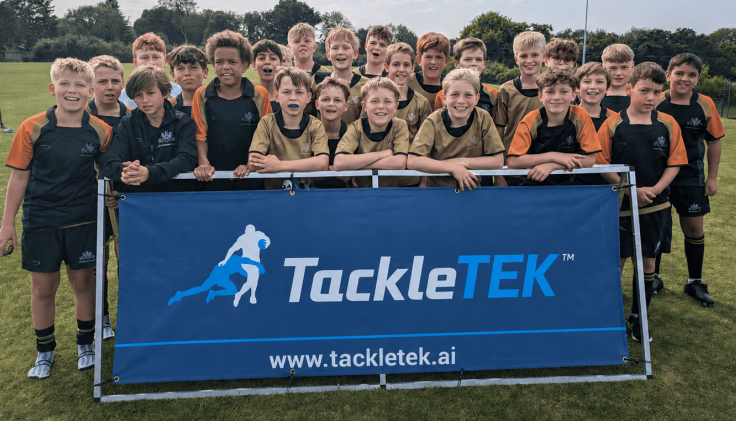
Rugby has never needed better contact coaching more than it does today.
Over the last decade, the game has faced growing scrutiny around player welfare, particularly when it comes to head injuries and concussions. High-profile legal cases involving former professional players, increased media attention, and evolving safety regulations have placed the tackle under the spotlight like never before.
At the same time, many coaches, schools and clubs have found themselves caught in the middle.
They know the tackle is a fundamental part of the game. They know players need to learn it. But they also know they have a responsibility to make the learning process as safe and effective as possible.
The challenge is that tackling has traditionally been coached using observation and experience alone. When that experience is lacking, tackling in training often gets neglected.
When speaking to clubs over the last few years as we have built TackleTEK, it was a surprise to hear how many coaches felt more comfortable putting players into full-contact match situations, both in training and competitively, than delivering structured technical tackling training to their players.
A coach can watch a player make a tackle and offer feedback based on what they see. While this approach has helped generations of players, it can be difficult to monitor every player consistently, especially in large school or club environments.
As pressure around player welfare has increased, so has the need for better ways to understand and develop tackling technique.
The Confidence Challenge
The conversation around safety is not just affecting coaches.
It is affecting parents, too.
Many parents are understandably asking more questions about contact sport than ever before. They want to know what is being done to help their children learn contact skills safely and progressively.
Schools and clubs face a similar challenge.
How do you demonstrate that players are developing competence in the game’s most demanding skill?
How do you identify players who need additional support before poor habits become ingrained?
How can we be proactive in protecting the longevity of rugby as we know it?
These are the questions that led to the creation of TackleTEK.
Why Now?
The reality is that the technology simply did not exist a few years ago.
Recent advances in artificial intelligence, video analysis and movement tracking now make it possible to assess human movement using nothing more than a standard camera.
The same technologies being used in elite sport, healthcare and biomechanics can now be applied to rugby coaching at grassroots level.
For the first time, tackling can be measured objectively.
Patterns can be identified. Progress can be tracked. Players who may be at higher risk can be highlighted. Coaches can receive meaningful insights that support their decision-making.
Supporting Coaches, Not Replacing Them
TackleTEK was never built to replace great coaching.
It was built to support it.
The best coaches will always be at the centre of player development. Technology simply provides another tool to help them understand what is happening across an entire squad.
By combining coaching expertise with actionable data, we believe rugby can create safer, more confident players while giving coaches greater confidence in the decisions they make.
Looking Ahead
Our mission is simple.
To help make contact sports safer, one tackle at a time.
We believe the future of rugby lies in combining great coaching, progressive player development and modern technology.
Because when coaches are better informed, players become more competent.
When players become more competent, they become more confident.
And when players are more confident, they are more likely to enjoy the game and stay involved for longer.
That is why we built TackleTEK.
We are looking to work with 20 organisations to help us develop our beta product before wider-scale rollout. If you are interested in registering for the chance to become a Founding Partner, please fill out the details on this link.